
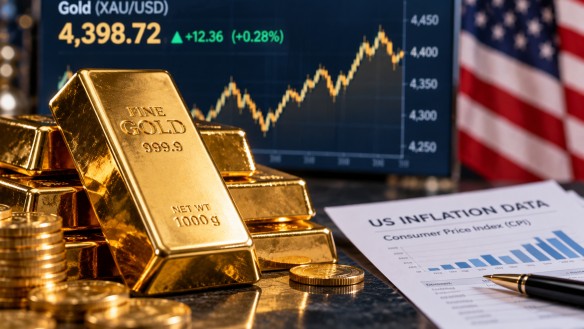
Gold prices are hovering close to $4,400 an ounce as investors anticipate new US inflation data, which could impact expectations regarding the Federal Reserve’s upcoming decision on interest rates. Spot gold has slightly increased by 0.4%, reaching about $4,418.87 per ounce. Similarly, gold futures have risen to approximately $4,461.82. This upward movement is partly due to a weaker US dollar, which makes gold priced in dollars more appealing to buyers using other currencies. The US Dollar Index has dipped to around 98.74, aiding gold’s appeal as it becomes less costly for international investors.
However, the rise in US Treasury yields is exerting some pressure on gold prices. The 10-year Treasury yield has climbed following plans to acquire up to $6 billion in longer-term government debt. Higher yields on government securities can decrease the attractiveness of gold since these securities provide interest income, whereas gold does not. As yields rise, the cost of holding gold can become more significant, potentially dampening demand for the precious metal.
Additionally, rising oil prices are contributing to inflation concerns in financial markets. Brent crude has recently hit around $100 a barrel, sparking worries about renewed inflationary pressures. Elevated energy prices can drive up costs for businesses and consumers, complicating efforts to control inflation. As a result, investors are closely monitoring the trends in both oil and gold prices to better understand the global economic outlook.
The focus is now on upcoming US inflation data, which is expected to provide crucial insights into the direction of interest rates. The Producer Price Index will be released first, followed by the Consumer Price Index. An inflation reading that surpasses expectations could lead to increased forecasts of tighter monetary policy, potentially putting downward pressure on gold. Conversely, if inflation proves weaker than anticipated, it could bolster expectations for lower interest rates, potentially boosting gold prices.
Geopolitical uncertainty, particularly tensions in the Middle East, is also driving demand for safe-haven assets like gold. The balance between a weaker dollar and safe-haven demand against rising Treasury yields and inflation concerns will likely dictate gold’s short-term trajectory. With prices near the $4,400 mark, investors are keenly awaiting the US inflation figures to gauge the Federal Reserve’s next steps. These data points could determine whether gold maintains its upward trend or encounters fresh challenges in the near term.