
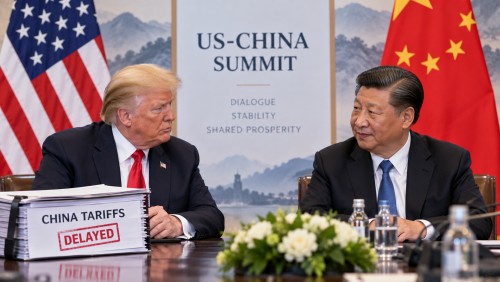
The anticipated delay in the United States’ announcement of new tariffs on China could significantly impact ongoing trade negotiations between the two nations. By postponing the decision until after the meeting between President Donald Trump and Chinese President Xi Jinping, the U.S. aims to leverage the threat of additional tariffs as a bargaining tool to secure more favorable trade terms.
Originally, the U.S. administration had been preparing to release a trade report addressing China’s surplus industrial capacity, which was expected to propose a 7.5% tariff on Chinese goods. This measure would have potentially increased the overall tariff rate on Chinese imports to approximately 20%. Notably, Beijing has previously suggested that such a level might still align with the terms of the existing trade truce.
In anticipation of the leaders’ summit, U.S. and Chinese negotiators are set to engage in discussions aimed at reaching potential agreements. President Xi’s upcoming visit to the United States marks his first since 2023, underscoring the importance of this diplomatic encounter in reshaping the trajectory of U.S.-China trade relations.
The decision to delay the tariff announcement comes in the wake of the Trump administration’s investigations launched in March under Section 301 of the Trade Act of 1974. These probes targeted excess production capacity among more than a dozen major trading partners, including China. Any resultant tariffs from these investigations could exacerbate existing duties and intensify trade tensions.
China has signaled that it might retaliate if U.S. tariffs surpass the levels agreed upon in the current trade truce, cautioning against the use of excess capacity concerns as a pretext for protectionist strategies. As both countries navigate these complex negotiations, tariffs remain a pivotal issue shaping the future of U.S.-China economic relations.