
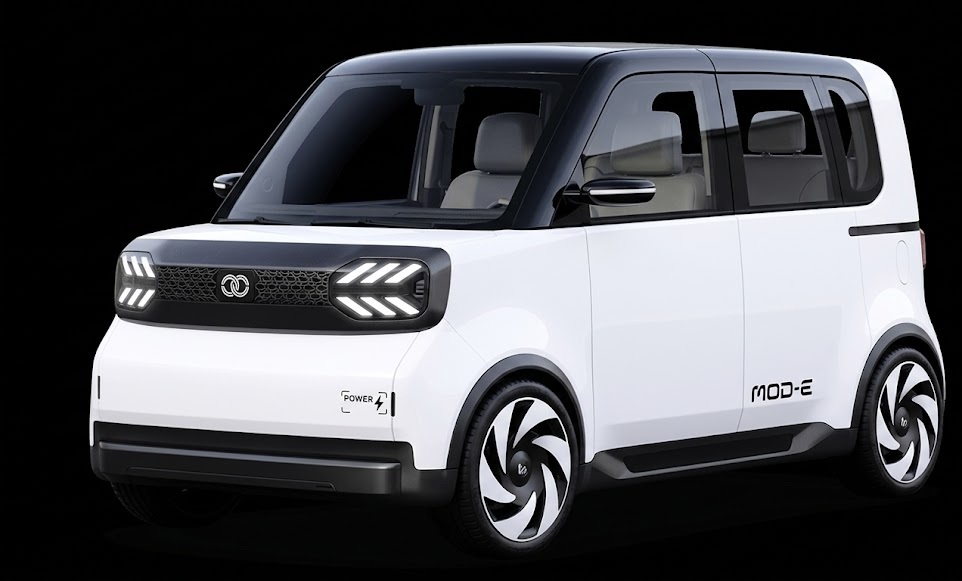
A collaboration involving Japanese automotive entities and China’s Chery Automobile has embarked on a mission to introduce a new electric vehicle brand tailored for the Japanese market, with its inaugural model expected to debut in 2027. The initiative, spearheaded by Yokohama-based EMT Co., will see the launch of the EMTA brand, which plans to roll out a compact electric kei car, a segment of significant importance in Japan.
The consortium includes notable Japanese companies such as Autobacs Seven and Anest Iwata, alongside Chery Automobile, a battery manufacturer, and other partners. EMT has outlined that while the upcoming kei electric vehicle (EV) will be planned and marketed domestically in Japan, its design and manufacturing will take place in China. These vehicles are set to feature cutting-edge digital enhancements, encompassing wireless software updates, smartphone connectivity, and support for automated driving capabilities.
Kei cars, which represent over a third of new vehicle sales in Japan, present a promising opportunity for entering the electric vehicle market. These vehicles are predominantly used for short commutes, thus alleviating concerns about driving range. EMT is also contemplating utilizing select Autobacs stores for vehicle sales and has plans to unveil three more electric vehicle models by 2029. Additionally, the company is considering future production within Japan and looking at potential expansion into international markets.
This announcement arrives amid growing competition in Japan’s kei EV sector. Chinese automaker BYD is gearing up to introduce its Racco kei EV specifically for Japan, while Nissan Motor has expanded its Sakura lineup with a more affordable variant. Furthermore, Suzuki Motor is slated to release a kei EV within the current fiscal year, and Honda Motor is in the process of developing an electric version of its well-known N-Box model, set for a 2028 launch.
The increasing number of entrants into the market underscores the burgeoning interest in Japan’s small electric vehicle landscape, as automakers vie to capture the attention of cost-conscious urban drivers. This movement signifies a shift towards more sustainable mobility solutions in one of the world’s most densely populated regions.