
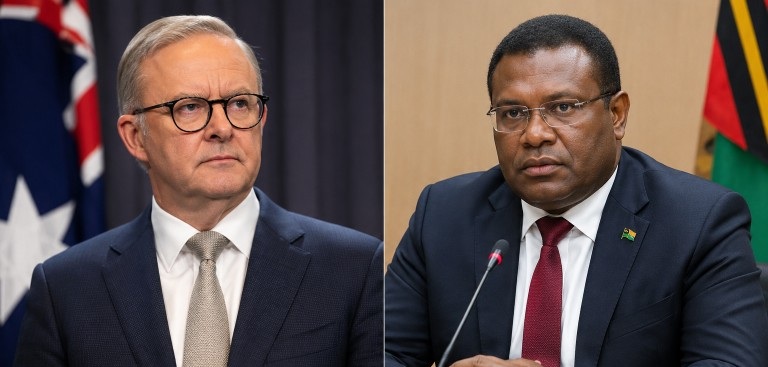
Australia and Vanuatu have formalized a crucial security and development agreement, known as the Nakamal Agreement, which aims to bolster collaboration between the two Pacific nations. This long-delayed pact solidifies Australia’s position as a central security and policing ally for Vanuatu while ensuring Australia has a voice in significant third-party investments in Vanuatu’s vital infrastructure sectors.
The agreement, which had experienced delays due to Vanuatu’s apprehensions about potentially restricting its capabilities to attract investments from other countries, has been carefully crafted to respect the island nation’s sovereignty. Importantly, the pact explicitly prohibits foreign military bases and the militarization of Vanuatu’s infrastructure, addressing key concerns raised during negotiations.
Australia has pledged substantial financial support over the coming decade as part of this agreement. This commitment reflects Australia’s strategic intentions to enhance its influence in the Pacific region, a move that comes amid rising competition with China. The region has seen increased attention from Beijing, with China becoming a significant investor and lender in Vanuatu, funding a range of infrastructure projects, including government buildings and transportation networks.
Despite the new agreement with Australia, Vanuatu remains open to continued economic cooperation with China, emphasizing its intention to maintain transparency in such engagements. This balance highlights Vanuatu’s strategy to leverage partnerships with multiple global powers while safeguarding its national interests.
This development is part of a broader effort by Australia to reinforce its ties with Pacific countries, as it navigates the challenges posed by strategic competition and foreign influences in the region. The Nakamal Agreement is not only a testament to the evolving dynamics in the Pacific but also underscores the importance of collaborative approaches to regional security and development.