
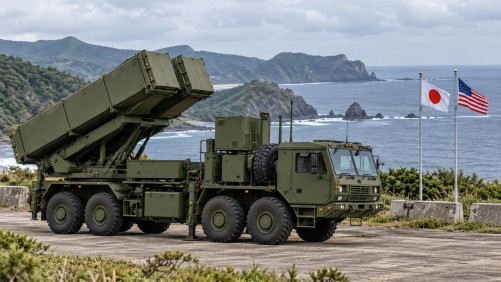
The United States is set to deploy an advanced anti-ship missile system to Japan’s Yonaguni Island during a significant joint military exercise later this month. This marks the first time the system, known as the Navy-Marine Expeditionary Ship Interdiction System (NMESIS), will be used on the island. The deployment comes as part of the US-Japan Keen Sword exercise, scheduled from October 19 to 29 across Japan’s southern island chain.
Yonaguni Island, Japan’s westernmost inhabited island, is located about 110 kilometers east of Taiwan. The planned deployment of NMESIS, which has a reported range of approximately 115 miles, aims to enhance the scope of military exercises traditionally held on the island. These exercises have historically focused on establishing a forward operating base.
In addition to the NMESIS, Japan is expected to deploy its own anti-ship and surface-to-air missile systems as part of the training exercises. These joint operations underscore the continuing military collaboration between the United States and Japan in the region.
The decision to bolster missile capabilities on Yonaguni has previously drawn criticism from China. Chinese officials have expressed concerns that such deployments could escalate regional tensions, reflecting the sensitive geopolitical dynamics in the area surrounding Taiwan.
The Keen Sword exercise is a recurring event designed to strengthen the alliance between the US and Japan through coordinated military training and strategic planning. The inclusion of advanced missile systems like NMESIS is indicative of the evolving nature of these military exercises, aligning with broader strategic objectives in the Indo-Pacific region.