
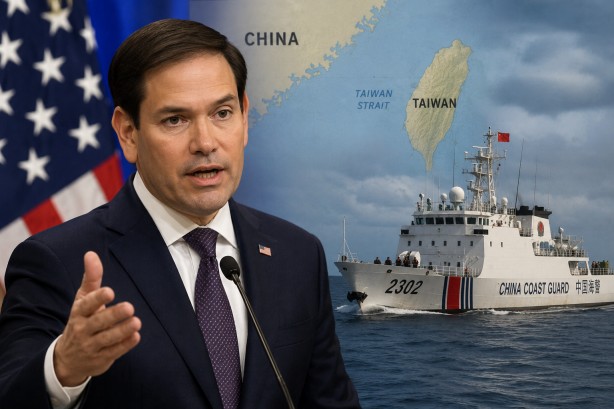
In a significant diplomatic exchange, U.S. Secretary of State Marco Rubio expressed the United States’ firm opposition to China’s recent coast guard patrols near Taiwan, emphasizing that such actions threaten regional stability and escalate tensions in the Indo-Pacific. Rubio conveyed these concerns during a meeting with Chinese Foreign Minister Wang Yi, which took place on the sidelines of the ASEAN summit in Manila. The U.S. has consistently voiced its apprehensions regarding Beijing’s maneuvers around Taiwan, Rubio noted, reiterating America’s commitment to safeguarding freedom of navigation and rejecting any efforts to limit access to international waters.
China’s recent activities, described as “special maritime law enforcement operations,” were launched near Taiwan last month. Beijing claimed these operations were a response to upcoming maritime boundary discussions involving Japan and the Philippines. Taiwan has reported an uptick in Chinese coast guard operations around the island and its surrounding waters, including instances where Chinese vessels have issued radio warnings to commercial ships in the area.
Highlighting the broader context of U.S.-China relations, Rubio mentioned that his meeting with Wang Yi also served as a platform to discuss preparations for an anticipated visit by U.S. President Donald Trump to Beijing scheduled for September. Both parties characterized the talks as constructive and expressed a mutual commitment to maintaining diplomatic engagement to ensure strategic stability in the region.
This dialogue underscores the ongoing complexities in U.S.-China relations, particularly concerning Taiwan, a sensitive geopolitical flashpoint. The U.S. continues to emphasize its stance on maintaining open and secure international waterways, an issue that remains central to its foreign policy in the Indo-Pacific. As such, Washington remains vigilant in addressing any developments that could potentially disrupt the region’s delicate balance.