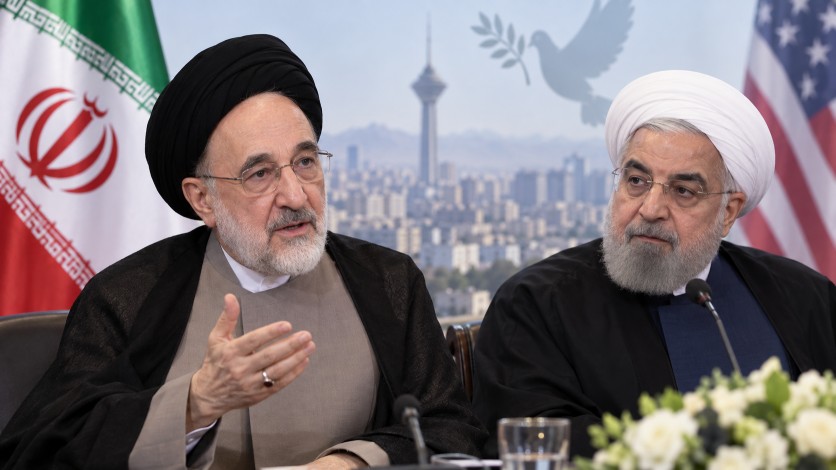
In a significant call for change, former Iranian presidents Mohammad Khatami and Hassan Rouhani have advocated for an end to ongoing tensions with the United States, urging for what they term an “honourable” or “dignified” peace. This stance poses a challenge to Iran’s prevailing hardline rhetoric. Rouhani, in particular, has called for the Iranian populace to be involved in deciding the nation’s approach to its prolonged conflict with major powers, suggesting that public support should guide whether confrontation continues.
Khatami has echoed similar sentiments, cautioning against ruling the nation through sustained wartime emotions. He promotes measured diplomacy and negotiations, emphasizing that Iran’s long-term national interests should supersede the push for relentless confrontation. These remarks from the former presidents have sparked strong backlash from hardliners within the country, with conservative media labeling their stance as one of surrender. Additionally, loyalist gatherings have included chants opposing the idea of compromise, and the hardline newspaper Kayhan’s editor has even called for investigations into Khatami and Rouhani.
The discourse emerges amidst escalating economic challenges in Iran. The country faces rising fuel costs and diminishing oil revenues, exacerbating its economic strain. Moreover, tensions in the Strait of Hormuz pose significant concerns for global energy markets. Despite these pressures, Iranian officials have maintained a firm public stance, cautioning that Tehran might adopt a more aggressive military posture if diplomatic efforts with Washington falter. This raises worries that economic distress might lead to further escalation rather than prompt concessions.
Meanwhile, there are ongoing regional diplomatic engagements, particularly between Saudi Arabia and Iran. Senior officials from both countries have been in contact, discussing methods to mitigate regional tensions and enhance stability. These diplomatic efforts highlight a clear contrast between the calls for dialogue and continued resistance, showcasing a growing divide within Iran’s political landscape.
While former leaders are pushing for negotiations and increased public involvement in decision-making, the current Iranian leadership remains steadfast in its warnings of potential military escalation if its demands remain unmet. This dichotomy underscores the complexities and challenges facing Iran as it navigates its internal and external political dynamics.