
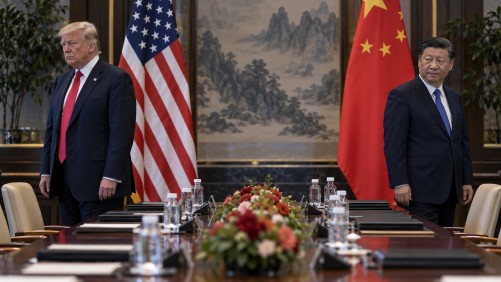
The summit between US President Donald Trump and Chinese President Xi Jinping concluded without a significant agreement on artificial intelligence (AI), even as global concerns about the rapid technological advancements grow. The three-day meeting in Washington primarily resulted in an extension of the existing trade truce between the two nations for another two months.
AI was a prominent topic on the agenda, with President Xi emphasizing the need for the United States and China to responsibly manage the development of AI technologies. He highlighted the importance of keeping AI systems under human control and advocated for increased cooperation between the countries to address potential risks associated with AI advancements. Despite these discussions, the summit did not yield any new frameworks or agreements to regulate the development of advanced AI systems or establish common safety standards.
President Trump, who has often stressed the importance of maintaining the United States’ technological edge over China, reiterated his preferred terminology of “super intelligence” for advanced AI during the summit. However, specific details of their discussions on AI remained sparse, leaving the issue unresolved.
Beyond AI, the two leaders tackled a range of other significant issues, including the ongoing conflicts in Iran and Ukraine, the situation in Taiwan, and trade relations. This summit marked the first visit by a Chinese president to the White House in over a decade, underscoring the importance of the bilateral relationship between the two nations.
While the summit did not produce groundbreaking outcomes in AI or other areas, it sets the stage for future engagements. Trump and Xi are expected to meet again later this year at the Asia-Pacific Economic Cooperation summit in China and the G20 summit in the United States, where further discussions on these critical issues may continue.